




Land Rover 2.7 & 3.0 TDV6 Timing Belt Guide
Land Rover 2.7 & 3.0 TDV6 Timing Belt Guide
Understand the front camshaft belt, rear fuel-pump belt, service intervals, early and later 2.7 engine differences and the parts required for a complete Land Rover TDV6 timing-belt service.

Which Land Rover engines does this guide cover?
This guide covers the Ford and PSA-developed V6 diesel engines used in Land Rover Discovery, Range Rover and Range Rover Sport models. The 2.7-litre engine is commonly known by the 276DT engine code, while the 3.0-litre version is commonly known as the 306DT.
Both engines use a toothed front belt to drive the camshafts and a separate toothed belt at the rear of the engine to drive the high-pressure diesel fuel pump.
Land Rover 2.7 TDV6 / 276DT
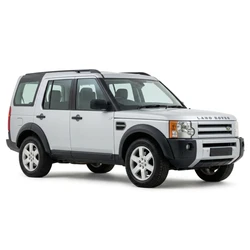
- Discovery 3 L319
- Early Discovery 4 L319
- Range Rover Sport L320
- Front camshaft timing belt
- Rear high-pressure fuel-pump belt
- Early and later rear-belt kits must be distinguished
Land Rover 3.0 TDV6 / SDV6 / 306DT
- Discovery 4 L319
- Discovery 5 L462 with V6 diesel engine
- Range Rover Sport L320 and L494
- Range Rover L322 and L405
- Front camshaft timing belt
- Rear high-pressure fuel-pump belt
The 3.0 TDV6 is not a timing-chain-only engine
The 3.0 TDV6 and SDV6 engine has internal chains connecting parts of the valvetrain, but it also has scheduled front and rear timing belts. Describing the engine as having only timing chains is incorrect and can lead to the scheduled belt replacement being overlooked.
Why are there two timing belts?
Front camshaft belt
The front belt is the main engine timing belt. It synchronises the crankshaft and camshafts so that the valves open and close in the correct relationship to piston movement.
Loss of this synchronisation can allow the pistons and valves to collide, causing extensive internal engine damage.
Rear fuel-pump belt
The smaller rear belt drives the high-pressure diesel fuel pump. It is positioned between the engine and transmission area and is therefore less visible than the main front belt.
Because it is out of sight, it is sometimes omitted from incomplete timing-belt services.
A complete TDV6 timing-belt service should include both belts
Replacing only the easily accessible front belt leaves the rear fuel-pump belt and its tensioner in service. Unless there is reliable evidence that the rear belt was replaced separately, both belts should be treated as due at the scheduled service.
Land Rover TDV6 timing-belt replacement intervals
Time is as important as mileage
A vehicle covering only a few thousand miles each year can still reach the seven-year interval. Timing-belt materials, tensioners and pulley bearings age through heat cycles, contamination and time as well as mileage.
Verify the interval for the exact vehicle
Service schedules can vary according to market, model year, engine calibration and operating conditions. Check the vehicle handbook, official maintenance schedule or Land Rover online service history before relying solely on a general interval.
Unknown service history
If there is no dated invoice or reliable digital service record, assume the belts are due rather than relying on a handwritten label or an unverified statement from a previous owner.
Vehicle over seven years old
The first replacement may have been due even though the vehicle had not reached the mileage limit. Many vehicles are now old enough to require their second scheduled belt service.
Severe operating conditions
Frequent short journeys, high temperatures, contamination and heavy use can justify earlier inspection or replacement on professional advice.
Land Rover vehicle and engine applications
| Vehicle | Engine | Typical production use | Timing-belt arrangement |
|---|---|---|---|
| Land Rover Discovery 3 L319 | 2.7 TDV6 | 2004–2009 | Front camshaft belt and early or later 2.7 rear fuel-pump belt |
| Land Rover Discovery 4 L319 | 2.7 TDV6 | Selected early models | Front belt and later 2.7 rear fuel-pump belt |
| Land Rover Discovery 4 L319 | 3.0 TDV6 / SDV6 | 2010–2016 | Front camshaft belt and LR016656-type rear fuel-pump belt |
| Land Rover Discovery 5 L462 | 3.0 TD6 / SDV6 V6 | Selected V6 diesel models | Front and rear belts; confirm engine generation before ordering |
| Range Rover Sport L320 | 2.7 TDV6 | 2005–2009 | Front belt and early or later 2.7 rear fuel-pump belt |
| Range Rover Sport L320 | 3.0 TDV6 / SDV6 | 2010–2013 | Front camshaft belt and 3.0 rear fuel-pump belt |
| Range Rover Sport L494 | 3.0 TDV6 / SDV6 | Selected 2014–2022 models | Front and rear belts; later front tensioner design may apply |
| Range Rover L322 | 3.0 TDV6 | Selected later L322 models | Front and rear timing-belt system |
| Range Rover L405 | 3.0 TDV6 / SDV6 | Selected models | Front and rear belts; confirm front tensioner generation |
TDV6, SDV6 and TD6 badges are not sufficient identification
Marketing badges do not always identify the precise engine generation or timing-belt tensioner. Use the VIN, engine type, model year and the components fitted to the vehicle before selecting a kit.
How to identify the correct Land Rover timing-belt kit
- Confirm whether the engine is 2.7 or 3.0 litres Do not order from the vehicle model alone. Some Discovery 4 and Range Rover Sport models were available with more than one V6 diesel engine.
- Record the full VIN The VIN helps identify the production date, engine specification and relevant parts change points.
- For a 2.7, identify the early or later engine specification Early vehicles use rear kit 1324390, while later vehicles generally use the LR019115-type rear kit. The change broadly coincided with the move to the later Euro 4 engine specification.
- For a 3.0, identify the front tensioner fixing size Early front kits commonly use an M8 tensioner fixing, while later engines use the revised M10 design.
- Check whether the vehicle has ACE where relevant The timing belts may be the same, but the auxiliary drive belt can differ on Range Rover Sport L320 vehicles with Active Cornering Enhancement.
- Decide whether a front kit or complete service kit is needed A front-only kit does not include the rear fuel-pump belt, and some basic kits do not include the two separate front idler pulleys.
Use the VIN rather than relying only on emissions terminology
The early-to-later 2.7 TDV6 change broadly follows the move to the later Euro 4 engine specification, but parts descriptions are not always consistent about whether earlier engines are described as EU2 or Euro 3. The vehicle VIN and engine specification provide a clearer method of identifying the correct rear-belt kit.
Check exactly what each kit contains
The phrase “timing-belt kit” may refer to only the front belt and its tensioner. A full service package may additionally include the rear belt, rear tensioner, two front idlers and auxiliary drive-belt parts.
Front timing-belt kit differences
Front belt and tensioner
LR016655 is a widely used front timing-belt and tensioner kit for Land Rover 2.7 TDV6 and earlier 3.0 TDV6 and SDV6 applications.
Depending on the product listing, the two separate front idler pulleys may need to be ordered in addition to the belt and tensioner.
Revised M10 tensioner fixing
Later 3.0 TDV6 and SDV6 engines use a revised front-belt tensioner with a larger M10 fixing instead of the earlier M8 arrangement.
The tensioners are not interchangeable simply because the belt looks similar. Confirm the engine generation and fixing specification.
Do not enlarge or adapt an incorrect tensioner
An M8 and M10 tensioner difference is an application change, not an instruction to modify the supplied component. Fit only the kit specified for the engine.
Front tensioner
Maintains the specified belt tension as the engine runs and the belt experiences temperature and load changes.
Front idler pulleys
Guide the belt around the timing drive. Their bearings are wear components and should not automatically be reused with a new belt.
Crankshaft pulley and fixings
The crankshaft pulley must be removed as part of the front-belt procedure. Follow the workshop instructions for all single-use fixings and tightening procedures.
Rear fuel-pump belt differences
The Land Rover 2.7 TDV6 rear fuel-pump belt and tensioner arrangement changed during production. This change broadly coincided with the move from the earlier emissions specification to the later Euro 4 engine, but the VIN should be used as the primary identification method.
| Engine/application | Common reference | Typical identification | Important note |
|---|---|---|---|
| Early Land Rover 2.7 TDV6 | 1324390 | Discovery 3 and Range Rover Sport generally up to VIN 6A999999 | Earlier rear-belt and tensioner design. Often associated with the earlier pre-Euro 4 engine specification. |
| Later Land Rover 2.7 TDV6 | LR019115 | Discovery 3, early Discovery 4 and Range Rover Sport generally from VIN 7A000001 | Later rear-belt, tensioner and fixing arrangement. Broadly associated with the Euro 4 engine specification. |
| Land Rover 3.0 TDV6 / SDV6 | LR016656 | Discovery 4, Range Rover Sport L320 and L494, Range Rover L322 and L405 and related 3.0 V6 diesel models | Separate 3.0 rear injection-pump belt and tensioner kit. This is not the same early-versus-Euro 4 change used for the 2.7 engine. |
Early versus later 2.7 rear kits
The 2.7 TDV6 rear belt changed during production. Early and later kits use different tensioner arrangements and should not be selected only by comparing belt length or tooth count.
Although the change broadly corresponds with the introduction of the Euro 4 engine specification, the VIN remains the clearest way to distinguish the two arrangements.
3.0 rear belt
The 3.0 engine uses its own rear fuel-pump belt and tensioner kit, commonly referenced as LR016656 or Dayco KTB702.
This is a separate 3.0 application and should not be confused with the emissions-related early and later 2.7 rear-belt distinction.
The rear pump does not require conventional injection timing
The common-rail high-pressure pump creates fuel pressure rather than mechanically controlling each injection event. However, the engine must still be locked and the rear belt installed according to the correct workshop procedure.
What should a complete Land Rover timing-belt service include?
Front belt
Main toothed belt driving the camshaft timing system.
Front tensioner
Correct early M8 or later M10 version for the engine.
Front idlers
Two separate guide pulleys commonly replaced with the belt.
Rear belt kit
Correct rear fuel-pump belt, tensioner and supplied fixing.
Auxiliary drive belt
Inspect or renew while the front of the engine is dismantled.
Auxiliary tensioner
Check spring action, pulley alignment and bearing condition.
Auxiliary idlers
Check for roughness, play, noise and damaged running surfaces.
Required fixings
Renew bolts and fasteners where the workshop procedure specifies.
Does the water pump need replacing?
On these engines the coolant pump is not driven by the toothed timing belt, so replacement is not automatically part of the cambelt procedure in the way it is on many other engines. It should nevertheless be checked for leakage, play or roughness while access is available.
Check for oil and coolant contamination
A new belt should not be fitted into an area contaminated by engine oil or coolant. Identify and repair leaking camshaft seals, covers, coolant connections or other sources before completing the belt installation.
A new belt does not make worn pulleys serviceable
Bearing seizure or tensioner failure can damage or dislodge a new belt. Replace the relevant tensioners and idlers rather than fitting a new belt around old wear components of unknown condition.
Can you tell when a Land Rover TDV6 timing belt is about to fail?
Usually not. Timing belts are scheduled service items and can fail without a useful dashboard warning or a long period of obvious noise. They should be replaced according to time and mileage rather than waiting for symptoms.
Visible belt damage
- Cracking or fraying
- Missing or damaged teeth
- Glazed or polished surfaces
- Oil or coolant contamination
- Exposed belt cords
Pulley or tensioner symptoms
- Rough bearing noise
- Visible pulley wobble
- Sideways belt tracking
- Weak or erratic tension
- Bearing play when dismantled
Missing service evidence
- No dated invoice
- No itemised parts list
- Only the front belt mentioned
- No evidence of rear-belt replacement
- Vehicle already beyond time or mileage
A quiet belt is not necessarily a healthy belt
Waiting for squealing, rattling or visible deterioration is not a safe maintenance strategy. Severe deterioration may be hidden beneath the timing covers, and a belt can suffer internal damage that is not obvious from an external inspection.
Important timing-belt fitting precautions
- Use the correct engine-locking tools The crankshaft and camshaft drive must be locked according to the workshop procedure before the front belt is removed.
- Do not rely on paint marks alone Paint marks are not a substitute for the specified locking tools, timing positions and tensioner-setting procedure.
- Confirm the correct front tensioner Identify whether the 3.0 engine requires the early M8 or later M10 tensioner before dismantling the vehicle.
- Fit the correct 2.7 rear-belt kit Confirm whether the vehicle requires 1324390 or LR019115 by VIN and engine specification. The distinction broadly follows the move to the later Euro 4 engine, but emissions terminology alone should not be used.
- Keep belts free from oil, fuel and coolant Do not handle the belts with contaminated gloves or use lubricants on the toothed surfaces.
- Follow the tensioner indicator procedure Set the tensioner in the correct direction and confirm the indicator position exactly as described in the workshop information.
- Turn the engine manually before starting After installation, rotate the engine through the specified number of complete revolutions and recheck the locking and tension positions.
- Follow all tightening specifications Use calibrated torque equipment and renew any single-use bolts stated in the workshop procedure.
Incorrect timing can cause immediate engine damage
Do not turn the starter motor until the timing positions, tensioner setting, crankshaft pulley installation and all removed components have been checked. Resistance while manually rotating the engine must be investigated rather than overcome with additional force.
Does the body need to be removed?
Body removal is not normally required for a routine front and rear timing-belt service. Access to the rear belt is restricted, so suitable tools, experience and careful working methods are still required.
Land Rover TDV6 timing-belt kits and components
Dayco front timing-belt kit
Front camshaft timing belt and tensioner for applicable Land Rover 2.7 TDV6 and earlier 3.0 TDV6 and SDV6 engines.
Check whether separate front idler pulleys are also required for the planned service.
View LR016655 Dayco kit
Early 2.7 TDV6 rear timing-belt kit
Rear high-pressure fuel-pump belt and tensioner for early Land Rover Discovery 3 and Range Rover Sport 2.7 TDV6 models, generally up to VIN 6A999999.
This is the earlier arrangement and broadly predates the later Euro 4 engine specification.
View early 2.7 rear kitLater 2.7 TDV6 rear timing-belt kit
Dayco rear high-pressure fuel-pump belt, tensioner and fitting for later Land Rover 2.7 TDV6 engines, generally from VIN 7A000001.
This later arrangement broadly coincides with the Euro 4 engine specification, although the VIN should always be checked.
View later 2.7 rear kit
3.0 TDV6 and SDV6 rear timing-belt kit
Dayco rear injection-pump timing belt, tensioner and fixing for applicable Land Rover 3.0 TDV6 and SDV6 engines.
View 3.0 rear belt kitFront belt, tensioner and idlers
A more comprehensive front service package containing the front belt, tensioner and both front idler pulleys for applicable Land Rover 2.7 and 3.0 engines.
View complete front kitLater Discovery 3 2.7 TDV6 complete service kit
Complete later Land Rover Discovery 3 2.7 TDV6 package containing front and rear timing-belt kits, front idler pulleys and auxiliary drive belt.
This kit is for the later engine specification, broadly corresponding with Euro 4 production.
View later Discovery 3 complete kitEarly Discovery 3 2.7 TDV6 complete service kit
Complete early Land Rover Discovery 3 timing-belt service package with the correct early rear belt, front components and auxiliary belt.
View early Discovery 3 complete kit2.7 L320 timing-belt packages
Complete timing-belt kits are available for early and later Range Rover Sport L320 2.7 TDV6 models, with different auxiliary belts for ACE and non-ACE specifications where applicable.
View an early L320 complete kitConfirm kit contents and VIN before ordering
A front LR016655 kit does not include the rear fuel-pump belt. A rear kit does not include the front camshaft belt. Complete service packages vary according to engine generation, vehicle model, VIN and auxiliary-belt specification.
Frequently asked questions
Does the Land Rover 2.7 TDV6 have one timing belt or two?
It has a main front camshaft timing belt and a separate rear belt driving the high-pressure diesel fuel pump. Both are scheduled service items.
Does the Land Rover 3.0 TDV6 use a timing belt or a timing chain?
It uses both types within the engine. The scheduled external timing system includes a front camshaft belt and rear fuel-pump belt, so it must not be treated as a chain-only engine.
What is the Land Rover 2.7 TDV6 timing-belt interval?
It is commonly specified as 105,000 miles or seven years, whichever occurs first. Verify this against the maintenance schedule for the exact vehicle.
What is the Land Rover 3.0 TDV6 timing-belt interval?
It is commonly specified as 112,000 miles or seven years, whichever occurs first. Confirm the schedule for the particular model, year and market.
Is the 2.7 rear-belt change related to Euro 4 emissions?
Broadly, yes. The later LR019115 rear-belt arrangement generally coincides with the move to the later Euro 4 engine specification, while 1324390 is used on earlier engines. However, terminology used for earlier engines can vary, so the VIN should be used to select the correct kit.
Which 2.7 rear-belt kit fits my vehicle?
Early vehicles generally up to VIN 6A999999 use 1324390. Later vehicles generally from VIN 7A000001 use LR019115. Always check the full VIN and product application before ordering.
Should the front and rear belts be changed together?
Yes, unless there is reliable evidence that one belt and its associated tensioner were replaced separately at the correct interval. Replacing both avoids leaving an overdue rear belt in use.
Does LR016655 contain both timing belts?
No. LR016655 is a front timing-belt and tensioner kit. The correct rear fuel-pump belt kit must be ordered separately unless purchasing a complete service package.
Why are there two Land Rover 2.7 rear-belt kits?
The rear belt and tensioner arrangement changed during production. Early engines commonly use 1324390 and later engines use the LR019115-type kit. The change broadly follows the introduction of the Euro 4 engine specification.
What is the difference between early and later 3.0 front kits?
The front tensioner fixing changed from an M8 design to a later M10 design. The correct kit must be identified by VIN, engine generation and fitted component.
Do I have to replace the water pump with the timing belt?
The water pump is not driven by the toothed timing belt on these engines, so it is not automatically included in every timing-belt service. It should be inspected and replaced if leaking, noisy or worn.
Can the belt condition be checked without replacing it?
A limited visual check may reveal obvious damage, but it cannot reliably establish the remaining service life of the belt, tensioner or pulley bearings. Use the scheduled interval and documented replacement history.
Does the body need removing to replace the belts?
Body removal is not normally required for a routine belt service. Access to the rear belt is restricted, and the work still requires suitable tools and experience.
Can I drive the vehicle if the timing belts are overdue?
Continuing to use overdue belts carries an increasing and unpredictable risk of belt, tensioner or pulley failure. Arrange replacement as soon as possible rather than waiting for symptoms.
Find the correct Land Rover TDV6 timing-belt kit
Browse front and rear timing-belt kits, complete cambelt service packages, idler pulleys, auxiliary belts and tensioners for Land Rover Discovery, Range Rover and Range Rover Sport 2.7 and 3.0 V6 diesel engines.