



Land Rover Discovery 1 Information
Land Rover Discovery 1 Information
Explore the history, body styles, engines and major changes of the original Land Rover Discovery, produced from 1989 until 1998.
The first Land Rover Discovery
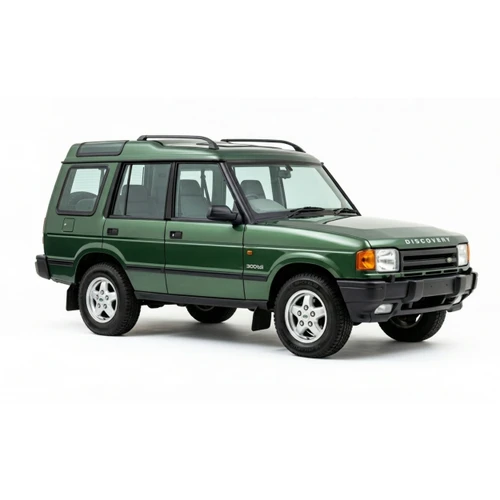
The original Land Rover Discovery was launched in 1989 to sit between the utilitarian Defender and the more luxurious Range Rover. It offered genuine Land Rover off-road capability in a practical vehicle designed to appeal to families and everyday drivers.
The Discovery shared much of its chassis, suspension and permanent four-wheel-drive system with the Range Rover Classic. Its distinctive body introduced the raised rear roof, alpine windows and stepped roofline that would become defining features of later Discovery models.
Initially available only as a three-door model, the five-door Discovery followed in 1990. Most vehicles had five seats, while optional inward-facing seats in the rear load area allowed some models to carry seven people.
Discovery 1 Body Styles
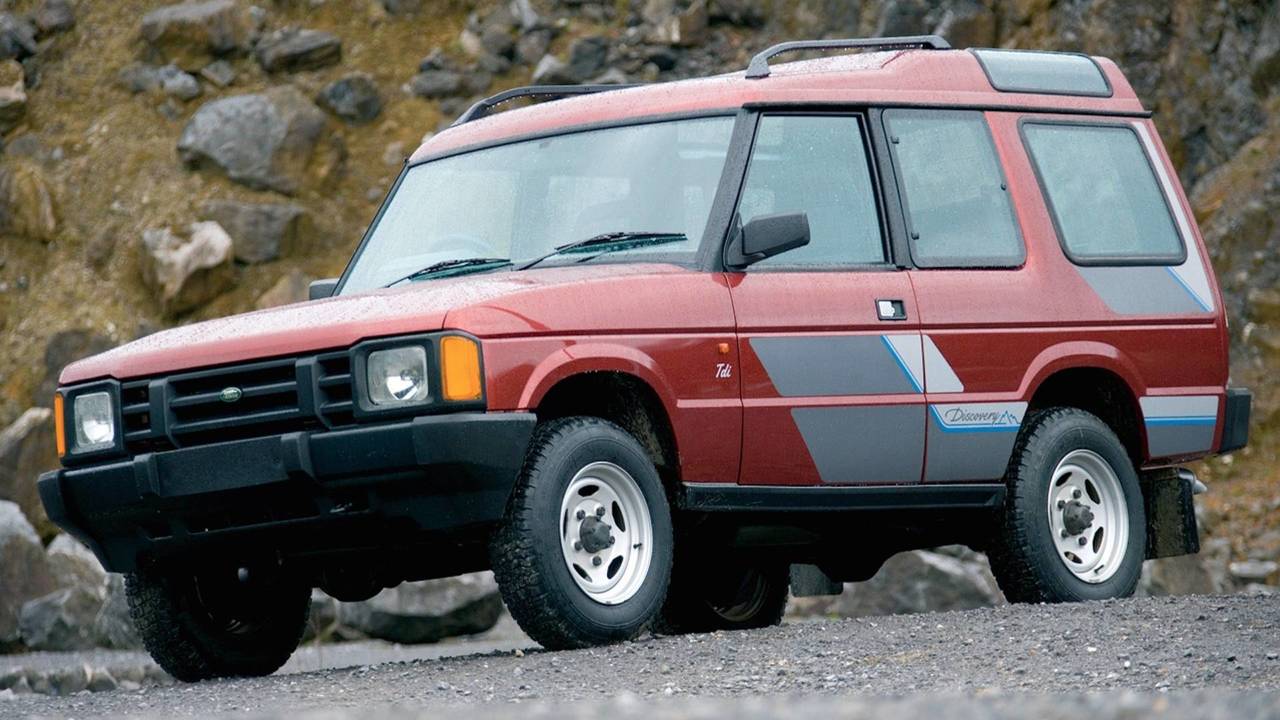
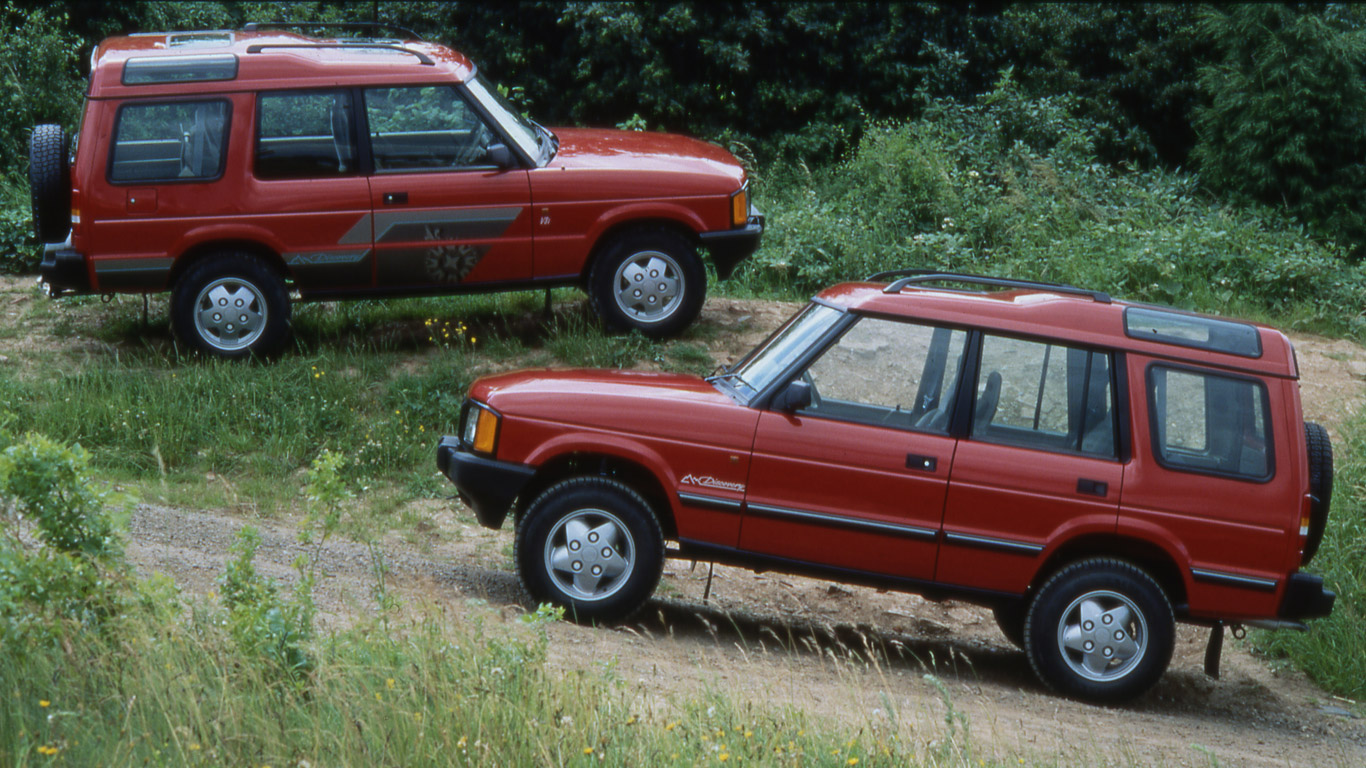
The Discovery 1 was offered in both three-door and five-door forms, with a range of trim levels and seating arrangements.
The original Discovery was launched with two long side doors and fixed rear side panels. Its unusual graphics, raised roof and practical interior gave it a distinctive identity that was clearly separate from the Range Rover.
The five-door version greatly improved rear-seat access and helped establish the Discovery as a practical family vehicle. It became the most familiar and widely sold version of the Discovery 1.
Some Discovery 1 models were fitted with two inward-facing folding seats in the rear load area. The availability and specification of these seats varied according to model, trim level and market.
Land Rover Discovery 1 History
The Discovery 1 developed from a relatively simple three-door model into a comfortable and highly capable family 4x4.
The original Discovery is launched
The Discovery made its debut as a three-door model. UK buyers could choose the new 2.5-litre 200Tdi direct-injection turbodiesel or a 3.5-litre Rover V8 petrol engine.
The five-door Discovery arrives
The five-door body provided easier access for rear passengers and increased the Discovery's appeal as a family vehicle. Fuel injection was also introduced on the 3.5-litre V8 petrol model.
1990s
The range expands
Additional trim levels, equipment and transmission choices were introduced. Depending on model and market, equipment could include electric windows, central locking, air conditioning, alloy wheels and optional seven-seat accommodation.
Major model-year update
A substantial update introduced the 2.5-litre 300Tdi diesel and 3.9-litre Rover V8 petrol engines. The revised Discovery also received larger headlights, a new grille, a redesigned dashboard and numerous mechanical and equipment changes.
Discovery 1 production ends
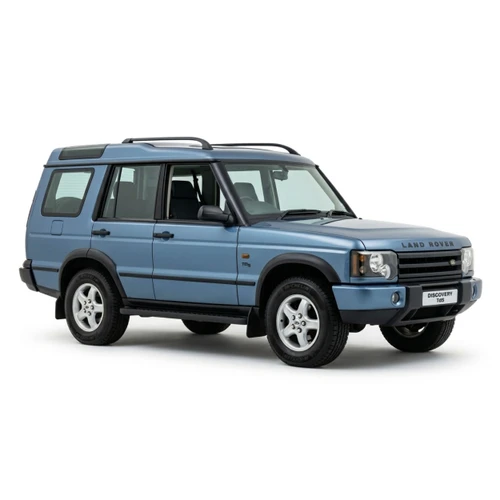
Production of the original model came to an end as the Discovery 2 was introduced. Although the Discovery 2 retained a similar overall appearance, it included extensive body, chassis, engine and electronic changes.
Principal Discovery 1 Engines
Confirming the engine is essential when choosing service parts, cooling components, exhausts, engine parts and transmission components.
2.5-litre 200Tdi Diesel
Used in early Discovery 1 models from 1989 until the 1994 update. The direct-injection, turbocharged and intercooled diesel offered useful torque and economy while retaining relatively simple mechanical fuel injection.
2.5-litre 300Tdi Diesel
Introduced with the 1994 model-year revision. The 300Tdi was extensively redesigned and was normally paired with the R380 manual gearbox, although automatic versions were also available.
V8
3.5-litre Rover V8 Petrol
Early Discovery 1 petrol models used the aluminium Rover V8. Initial vehicles used carburettors, with fuel-injected V8i versions becoming available during the early production period.
V8
3.9-litre Rover V8 Petrol
The larger fuel-injected 3.9-litre Rover V8 replaced the earlier 3.5-litre engine as part of the 1994 update, providing smoother and stronger petrol-engine performance.
How to Identify Your Discovery 1
Many components changed during production, and older Discoverys may have replacement engines, axles or transmissions fitted.
Check the VIN or chassis number
The VIN identifies the original model year and specification. Many Discovery 1 parts are separated by a specific VIN breakpoint rather than registration year alone.
Confirm the engine type
Establish whether the vehicle has a 200Tdi, 300Tdi, 3.5 V8 or 3.9 V8 engine. Engine swaps are common, so do not rely solely on the vehicle's age or registration.
Check early or later specification
The 1994 update changed the engines, dashboard, lighting, body trim and numerous mechanical parts. Compare the existing component and any visible part numbers before ordering.
Shop Land Rover Discovery 1 Parts
Browse replacement parts, service items, accessories and upgrades for 200Tdi, 300Tdi and Rover V8 Discovery 1 models.
Discovery 1 Parts
Browse our complete Discovery 1 range, including braking, suspension, steering, engine, transmission, body, electrical and service components.
Shop Discovery 1 PartsLooking for Discovery 2 Parts?
The Discovery 2 replaced the original model in 1998. Despite its similar shape, many Discovery 2 body, mechanical and electrical components are different.
Shop Discovery 2 PartsUnsure which Discovery 1 part you need?
Send us your vehicle registration or VIN, engine type and details of the component you are replacing. Including clear photographs and any numbers from the original part can help us check the most likely fitment.