



Land Rover Series Information
Land Rover Series Information
Explore the generations, wheelbases, engines and important identifying features of the Land Rover Series I, Series II, Series IIA and Series III.

The original Land Rover
The first production Land Rover was introduced in 1948 as a simple and versatile four-wheel-drive vehicle for farming, industry, military use and export markets.
Its separate steel chassis and aluminium-alloy body created a durable construction that could be adapted into soft tops, hard tops, station wagons, pick-ups and numerous specialist vehicles.
Vehicles produced before 1958 are now known as Series I models. Series II followed in 1958, Series IIA in 1961 and Series III in 1971.
Land Rover Series Models
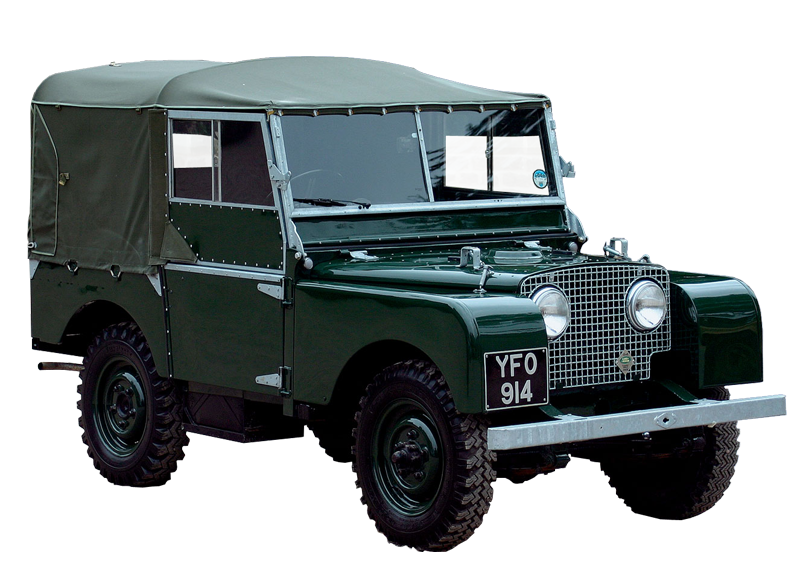
Each generation introduced visual, mechanical and interior changes while retaining the original working-vehicle concept.
Series I
1948–1958Produced in several wheelbases, including 80, 86, 88, 107 and 109 inches. Early vehicles have headlamps behind the central grille.
Series II
1958–1961Introduced wider bodywork and the rounded shoulder line that became a defining Land Rover design feature.
Series IIA
1961–1971Closely related to the Series II, with continuing engine, lighting and mechanical development throughout production.
Series III
1971–1985Introduced a moulded grille, revised dashboard and synchromesh on all forward gears.
Land Rover Series History
The familiar basic design remained in production for decades while engines, wheelbases and equipment continually developed.
The first production Land Rover
The original 80-inch model entered production with a 1.6-litre petrol engine and a simple aluminium-alloy body mounted on a separate steel chassis.
Series II is introduced
Wider bodywork and the familiar rounded shoulders arrived, with 88-inch and 109-inch models becoming the principal wheelbase choices.
Series IIA replaces Series II
Petrol and diesel engines were offered in numerous body configurations. Later vehicles moved their headlamps into the front wings.
Series III enters production
A moulded grille, revised dashboard and all-synchromesh gearbox helped distinguish the Series III from earlier models.
Stage One V8 arrives
The Stage One combined a 109-inch Series III body with a 3.5-litre Rover V8, LT95 gearbox and permanent four-wheel drive.
The 90 and 110 replace the Series range
The coil-sprung 110 arrived in 1983 and the 90 followed in 1984, gradually replacing the traditional leaf-sprung Series III.
Land Rover Series Wheelbases
Wheelbase affects chassis, body, suspension, exhaust and driveline components.
Early Series I
The original production model. Many chassis, body and suspension parts are unique to these earliest vehicles.
Short-Wheelbase Models
Later Series I models used 86 or 88-inch chassis. Series II, IIA and III short-wheelbase models normally use the 88-inch configuration.
Long-Wheelbase Models
Long-wheelbase Series I vehicles included 107 and 109-inch versions. Later Series models generally use the 109-inch chassis.

Simple construction with enormous variety
Series Land Rovers use a separate ladder chassis, leaf-spring suspension, beam axles and bolt-together aluminium-alloy body panels.
This repairability means surviving vehicles may contain a mixture of original, replacement and later components. Visual comparison is often as important as the vehicle’s age or registration details.
Principal Land Rover Series Engines
Identify the engine actually fitted, as later conversions are common.
1.6 and 2.0 Petrol
Early Series I vehicles used 1.6-litre and later 2.0-litre petrol engines with model-specific service, cooling and fuel-system components.
2.0 Diesel
A 2.0-litre diesel became available on later Series I models and differs from the later 2.25-litre diesel.
2.25 Petrol
One of the best-known Series engines. Early and late versions include three-bearing and five-bearing crankshaft specifications.
2.25 Diesel
Widely fitted to Series IIA and III models. Fuel, cylinder-head and internal components vary by engine age.
2.6 Six-Cylinder Petrol
Used in selected long-wheelbase vehicles, with different cooling, exhaust, clutch and engine components.
3.5 Stage One V8
The Stage One uses a Rover V8, LT95 transmission and permanent four-wheel drive, with model-specific front bodywork and cooling components.
How to Identify Your Series Land Rover
Use several identification points together, particularly on vehicles that have been rebuilt or modified.
Check the chassis number
This can identify the original model, wheelbase, engine type and production period.
Confirm the wheelbase
Establish whether the vehicle is an 80, 86, 88, 107 or 109-inch model.
Identify the fitted engine
Use the engine number and visible features rather than relying only on the registration document.
Check the front and dashboard
Headlamp position, grille type and instrument layout can help distinguish the generations.
Inspect the axles and brakes
Confirm Rover or Salisbury axles and establish the fitted drum-brake size and hub arrangement.
Compare the existing part
Check measurements, mounting holes, threads and casting numbers against the replacement listing.
Shop Land Rover Series Parts
Browse engine, gearbox, axle, braking, suspension, steering, body, electrical and service components for Series I, II, IIA and III models.
Shop All Land Rover Series Parts
Unsure which Land Rover Series part you need?
Send us the chassis number, wheelbase, engine type and details of the component being replaced. Please mention any known engine, gearbox, axle or brake conversions and include clear photographs and measurements where possible.